





Achieving Security and Trust—In Space. Toshiba Europe’s Cambridge Research Laboratory Takes on the Challenge of Global Quantum-Safe Communications
Achieving Security and Trust—In Space. Toshiba Europe’s Cambridge Research Laboratory Takes on the Challenge of Global Quantum-Safe Communications
2026/04/24 Toshiba Clip Team
- Quantum cryptographic communication is critical to protect data in the post-quantum era.
- Satellite quantum key distribution (QKD) overcomes the physical limits of fiber-optic networks, realizing the secure intercontinental links essential for global scale quantum networks.
- Backed by more than 25 years of research, Toshiba has developed a high-speed, compact QKD system for satellite deployment and completed a ground demonstration that confirms operation.
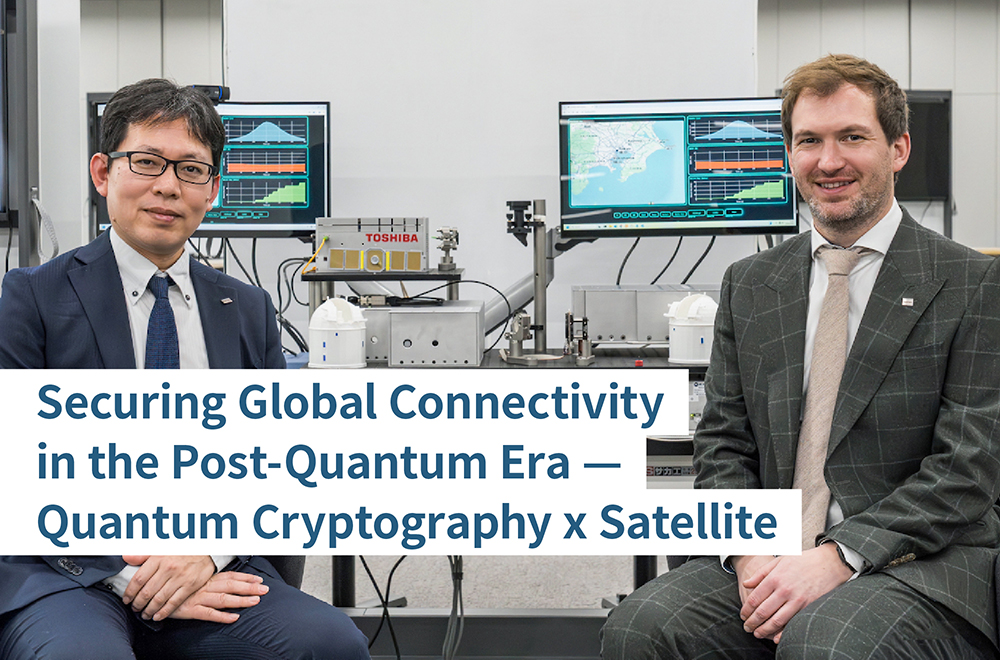
Financial systems, critical infrastructure, and medical services all rely on unseen layers of cryptographic technology to keep our essential data secure. Yet this security we all take for granted is approaching a turning point.
The rapid progress of quantum computing threatens to overturn the cryptographic foundations of the digital world. With their overwhelming computational power, quantum computers have the potential to break through the mathematical barriers that underpin today’s security measures. If realized, the technology could fundamentally undermine the trust that supports our digital economy.
To address this looming threat, Toshiba has spent more than a quarter of a century advancing quantum cryptographic communication, centered on quantum key distribution (QKD).
In January 2026, Toshiba announced its state-of-the-art QKD transmitter–receiver system for satellite deployment, along with the successful completion of a ground demonstration confirming that the system, engineered for space operations, can seamlessly interoperate with terrestrial fiber‑based QKD networks. This achievement represents a significant milestone toward secure intercontinental communications and a decisive step in realizing a truly global quantum network.
This is the story of Toshiba’s researchers pursuing space‑enabled quantum security—and a vision of trust at the global scale.
Why Take QKD into Space? — The Barrier to Intercontinental Communication
QKD plays a central role among the technologies expected to secure communications in the quantum era. QKD works by encoding cryptographic keys onto individual photons — the smallest units of light. Based on the fundamental laws of quantum mechanics, any attempt to intercept these photons can be detected. In theory, this makes QKD immune to computational attacks, including those from future quantum computers.
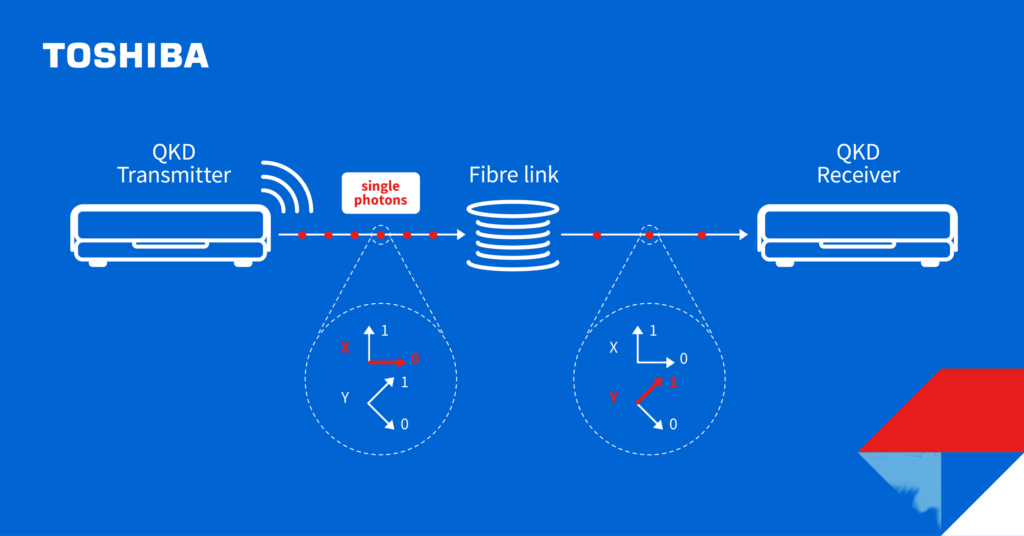
Toshiba began quantum research at its Cambridge Research Laboratory in 1991 and launched full-scale QKD development in 1999. Over 25 years of refinement have led to demonstrations of metropolitan-scale quantum networks in Japan, Singapore, South Korea, the UK and the US. In Paris, France, these efforts progressed to the point of launching commercial services in 2025.
But as deployment has expanded, a critical limitation has become clear.
In fiber-optic QKD, signal loss increases exponentially with distance. Because quantum states cannot be copied or amplified, extending secure links beyond a few hundred kilometers is extremely challenging.
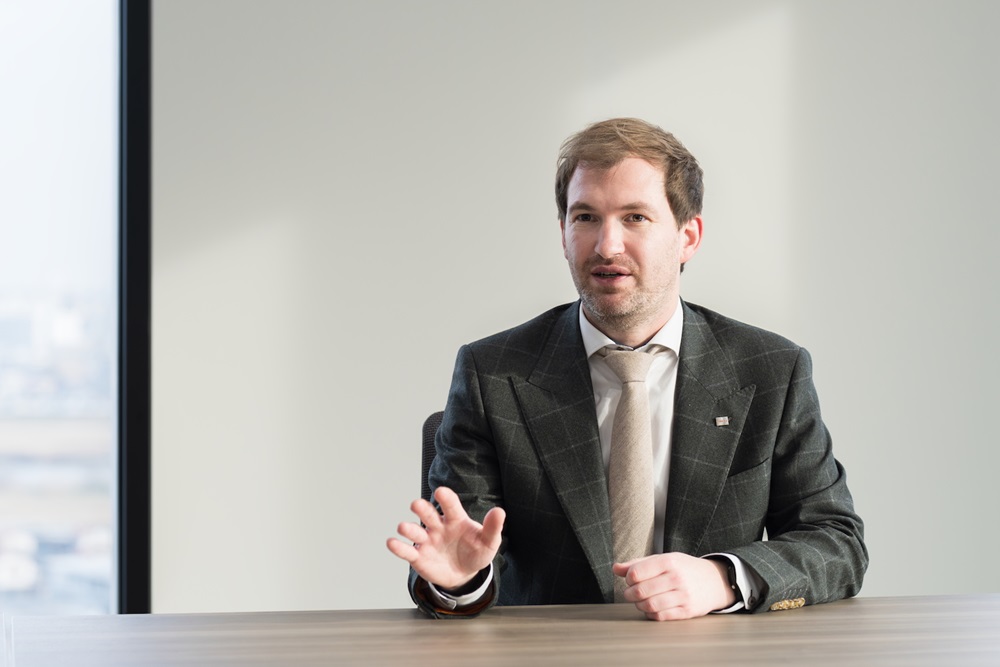
“Toshiba’s quantum networks already extend over cities and countries, and deliver QKD over fiber-optic cable,” explains Dr. Thomas Roger, who leads satellite QKD research at Toshiba Europe’s Cambridge Research Laboratory. “But connecting those networks globally would require QKD repeaters in submarine cables, which is not feasible with current technology. The most promising solution to this challenge is Satellite QKD.”
Because light suffers far less loss in free space than in optical fiber, low-Earth orbit (LEO) satellites can distribute quantum states to the ground while sustaining high secure key rates over long distances. With precise optics and advanced tracking, a single LEO satellite can share keys with ground stations worldwide, linking sites thousands of kilometers apart even though those stations are not in direct line of sight with each other.
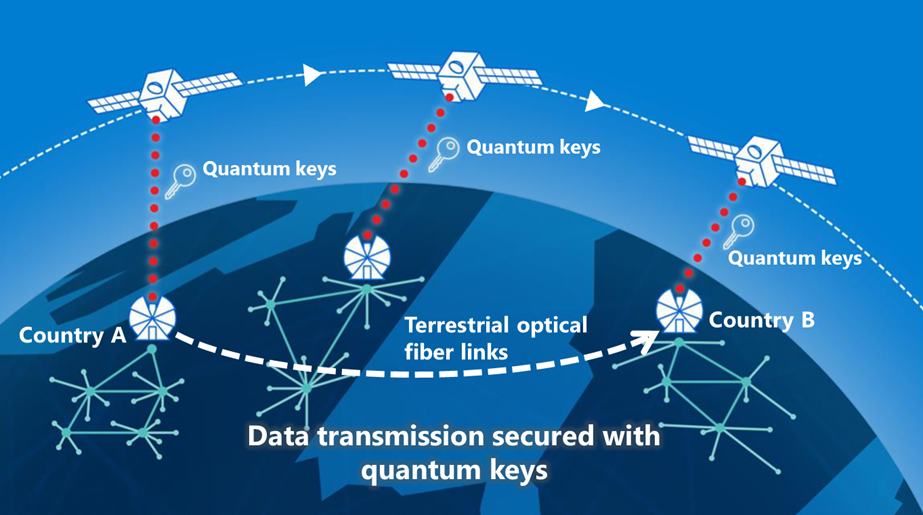
Satellite QKD research and development has been pursued in many countries, including Japan and the UK. A shared challenge lies in achieving a system that is small and light enough for satellite deployment, while also capable of transmitting sufficient keys during the time a satellite passes over a ground station.
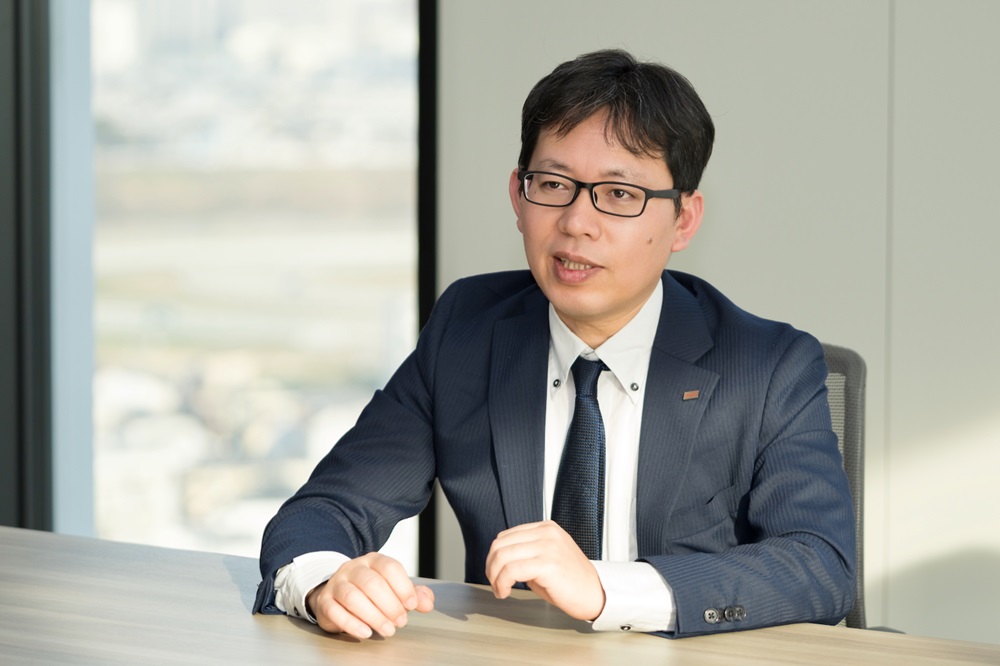
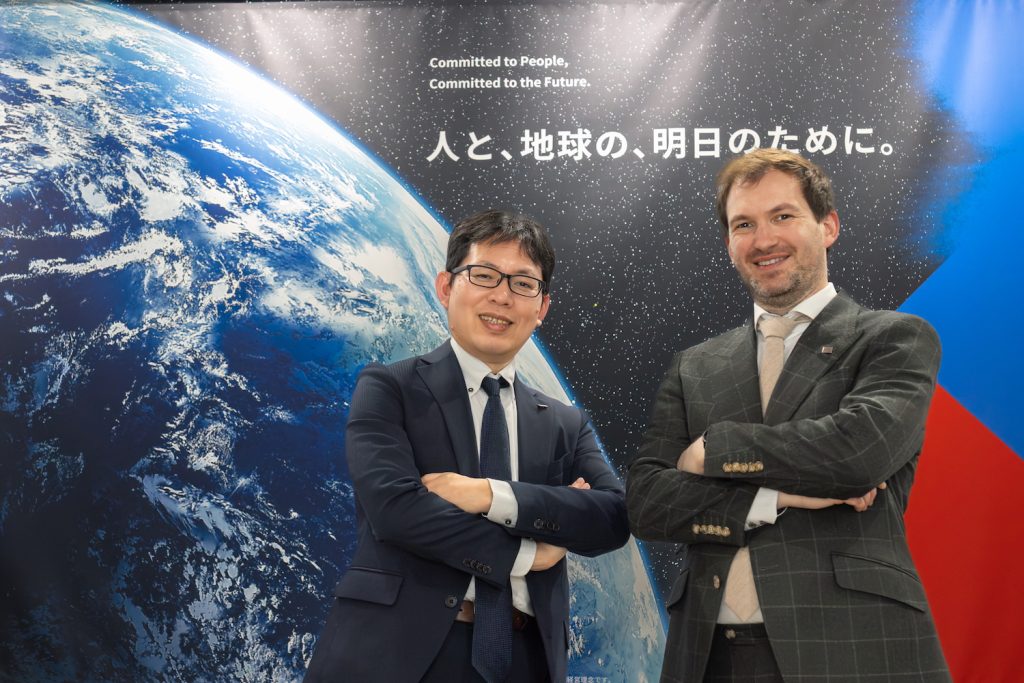
Tatsuo Kozakaya, Deputy Director of the Cambridge Research Laboratory, emphasizes the point: “Satellite QKD is indispensable for building quantum networks that span continents. When I first heard the concept, I wondered whether it was really possible—it sounded almost like a dream. But the need to securely transmit critical data anywhere in the world will only grow. Satellite QKD is a realistic and essential option for connecting the individual quantum networks we already have and realizing quantum cryptographic communication on a global scale.”
The expansion of quantum cryptographic communications from the ground into space reflects a simple goal: to provide secure communications over greater distances with higher reliability. Satellite QKD represents the next decisive step in that effort.
The Cambridge Advantage: Where Disciplines Converge
The satellite QKD project did not emerge overnight. It represents the evolution of Toshiba’s expertise, cultivated through many years of research, into an approach aimed at addressing societal challenges.
“The high precision laser control and optical design capabilities we have developed are the results of years of steady progress,” Roger notes. “Satellite QKD builds directly on those foundations.”
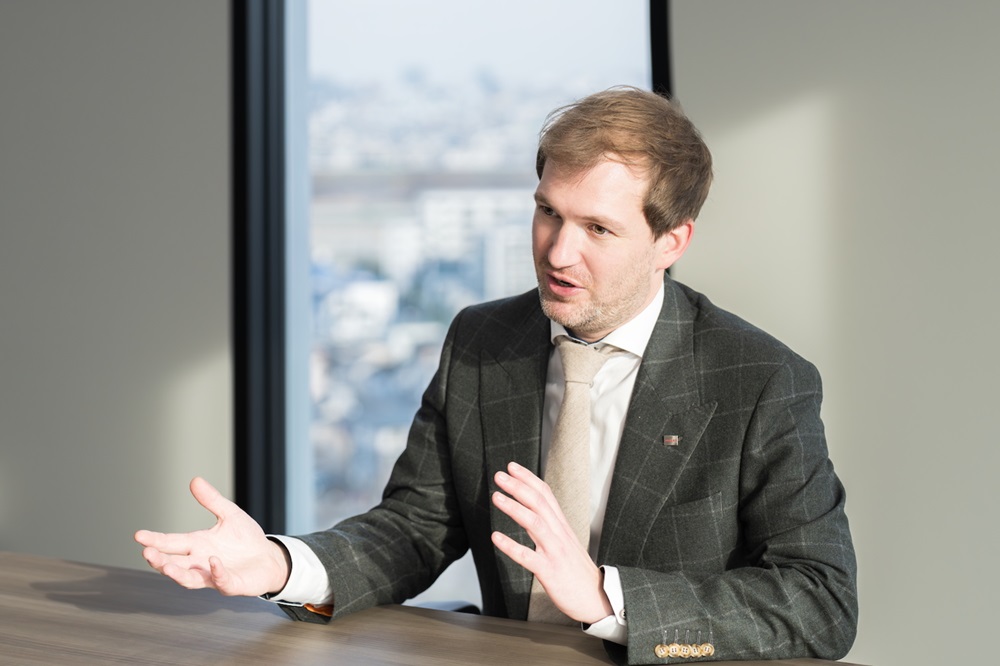
The project’s success is also rooted in the diverse talent at the Cambridge Research Laboratory. Satellite QKD requires expertise spanning photonics, chip design, optical systems, software, and network engineering. When challenges arise, specialists collaborate across fields.
“The open, collaborative culture is our greatest strength,” Kozakaya explains. “We have top-level, multidisciplinary researchers here that we can immediately turn to for expertise, and who can help one another.”
Located in the high-tech cluster known as Silicon Fen, named for the fens, the wetlands that used to surround Cambridge, the laboratory benefits from a vibrant ecosystem that bridges fundamental science and real-world deployment.
The ability to build intercontinental quantum networks is underpinned by a robust research foundation and a cross-disciplinary team culture nurtured over many years in this environment.
Out of the Laboratory and into the Field: Theory Becomes Reality
A defining milestone came when the team moved beyond simulations and into real-world testing.
The demonstration took place at the optical ground station (OGS) of Heriot-Watt University in Edinburgh. In this environment, the system faced real atmospheric conditions and external disturbances.
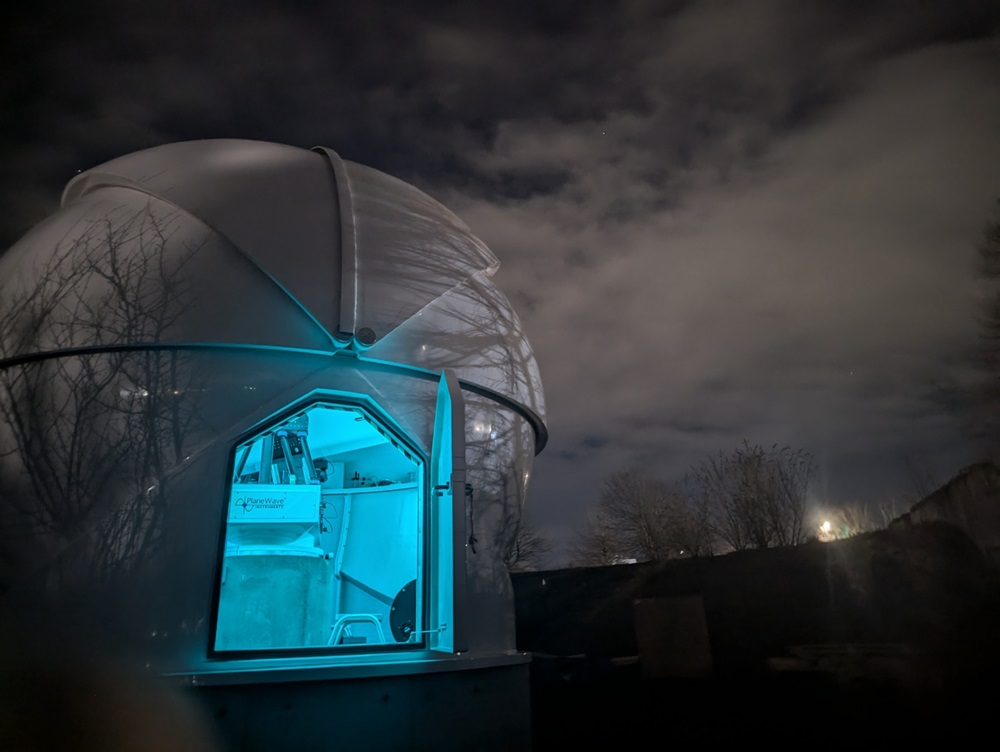
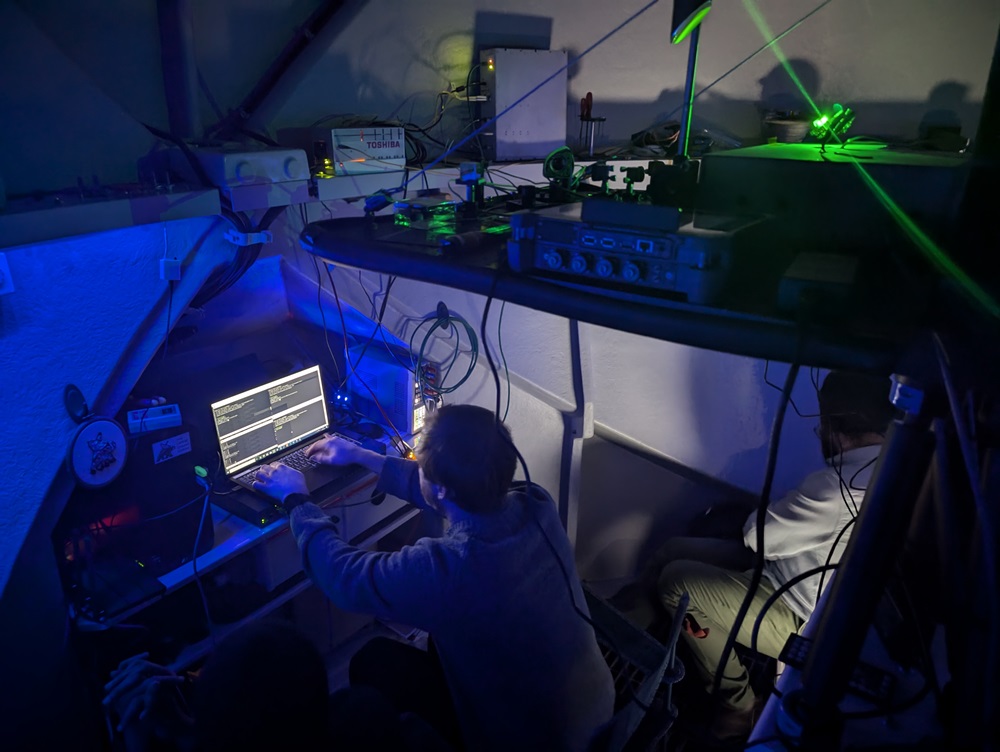
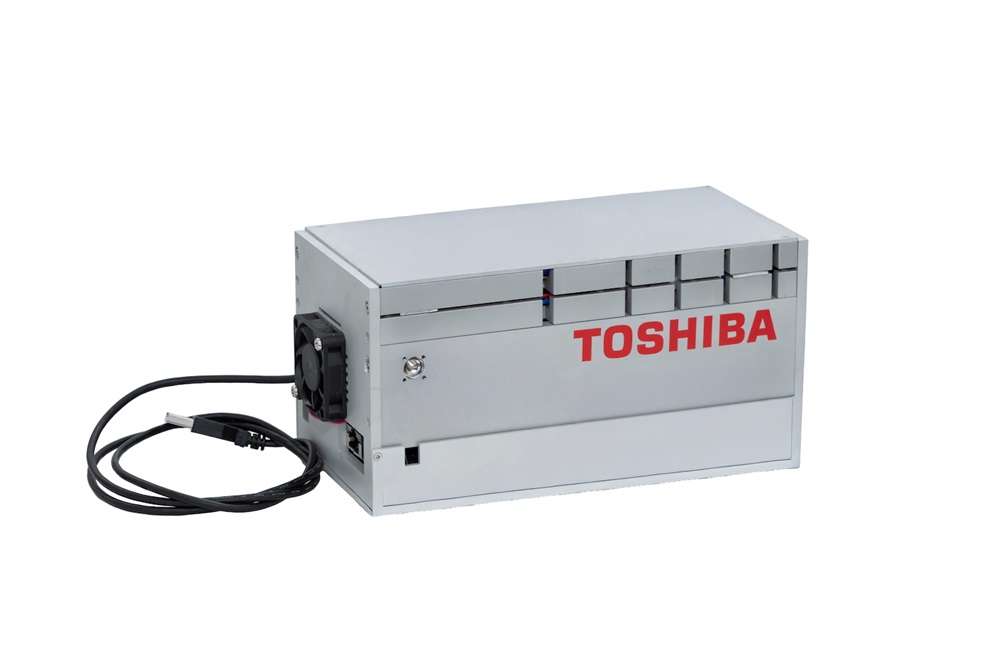
As announced in January 2026, the team successfully developed a compact QKD transmitter designed for low-Earth-orbit satellite deployment, measuring 20 × 10 × 10 cm and weighing just 1.6 kg. The system has a 1 GHz high-speed transmission rate, allowing large numbers of quantum keys to be sent during the brief window when a satellite passes overhead. The demonstration also confirmed that the generated quantum keys could work seamlessly on terrestrial quantum networks using ETSI standard protocols.
Roger recalls the moment theory became reality: “We installed the QKD transmitter in front of the telescope inside the OGS and sent quantum states of light (photons) over free‑space, which were decoded by a receiver mounted on the telescope. At the OGS, we were able to reconstruct the quantum keys, confirming that the free‑space link worked correctly. At the same time, we used those keys to encrypt an image of the Toshiba and University logos and sent it over a 1‑km fibre link secured by our commercial QKD system to a lab. Then, sitting with my colleagues in the near complete darkness of the dome, we waited for the encrypted data to travel to the lab, and saw the logo image appear on the screen exactly as it should. That was a memorable moment for all of us.”
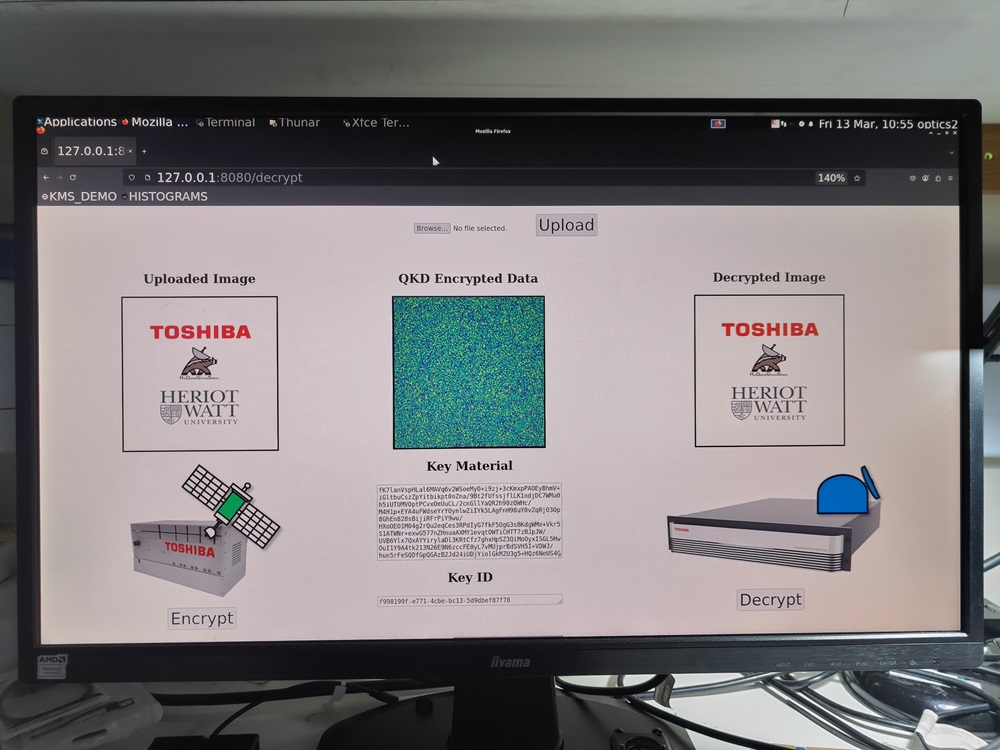
This achievement confirmed that the system works outside ideal laboratory conditions and satellite QKD is no longer just a research topic—it is steadily becoming a tangible infrastructure technology.
Toward Space: Safeguarding the Future of Trust
Satellite QKD is more than a technological breakthrough. It addresses a fundamental societal question: how do we preserve trust in a digital world?
Data underpins everything — finance, healthcare, energy infrastructure, government services. As AI and cloud computing expand, the value and sensitivity of this data will only grow.
“If trust in data collapses, society cannot function,” Kozakaya warns. “Satellite QKD will not replace all communications, but it will serve as a foundational layer securing the most critical information across continents.”
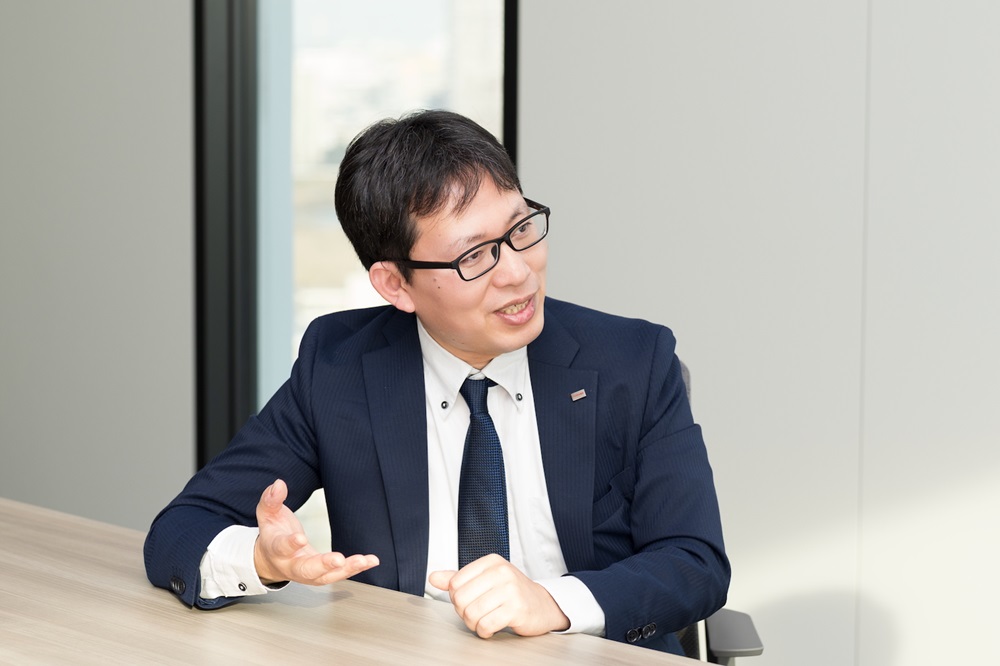
Looking ahead, Toshiba aims to demonstrate long-distance communication between low-Earth-orbit satellites and ground stations by fiscal year 2027. Significant challenges remain, including resilience to the harsh space environment and ensuring stable performance across day-night cycles and varying weather conditions.
Yet the motivation is clear.
“I want to see something I designed launched by rocket and operating in space,” Roger says. “The intersection of quantum science and space engineering is incredibly exciting.”
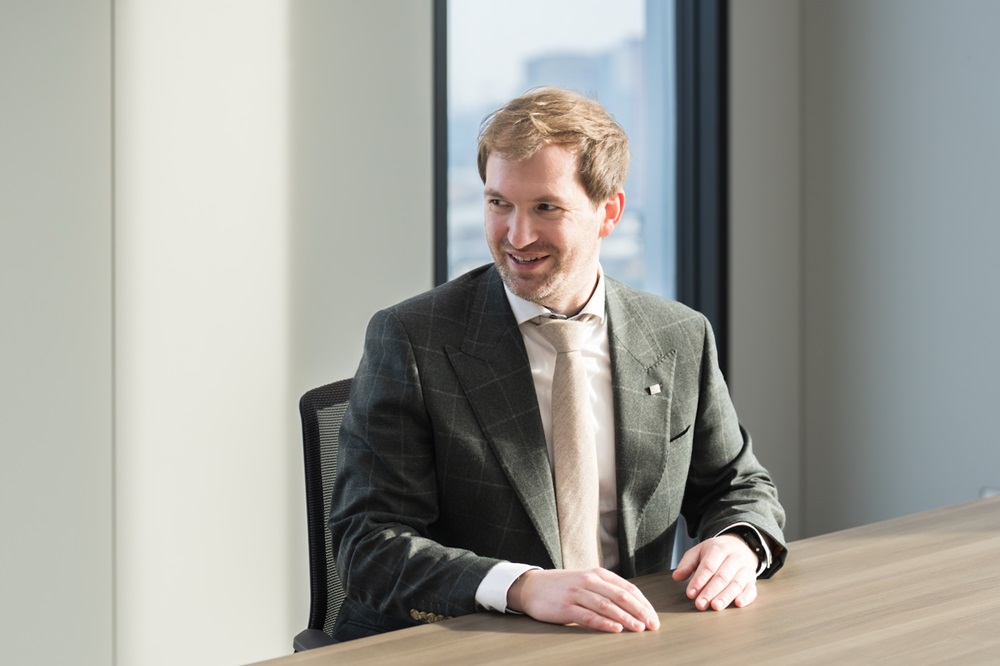
Satellite QKD represents one of the key components needed to connect isolated secure networks into a truly global quantum infrastructure.
Guided by Toshiba’s philosophy — Committed to people, Committed to the Future — dedicated researchers at Toshiba are now taking the cryptographic keys that safeguard our digital society beyond the constraints of Earth. Security is reaching into space — linking continents, protecting trust, and shaping the future of global communications.

Share this article