





We are Toshiba: Do the Right Thing and Embrace Integrity in Every Action to Build the Foundation for the Future – A Leader’s Journey, Upholding the Toshiba Spirit
We are Toshiba: Do the Right Thing and Embrace Integrity in Every Action to Build the Foundation for the Future – A Leader’s Journey, Upholding the Toshiba Spirit
2026/06/29 Toshiba Clip Team
- Embracing the spirit of adapting to local cultures has fostered a deep connection with Toshiba
- Overcoming complex challenges through disciplined management and a unified “One Team” approach
- Living by the principle of “Do the Right Thing” in all relationships with customers, colleagues, and family
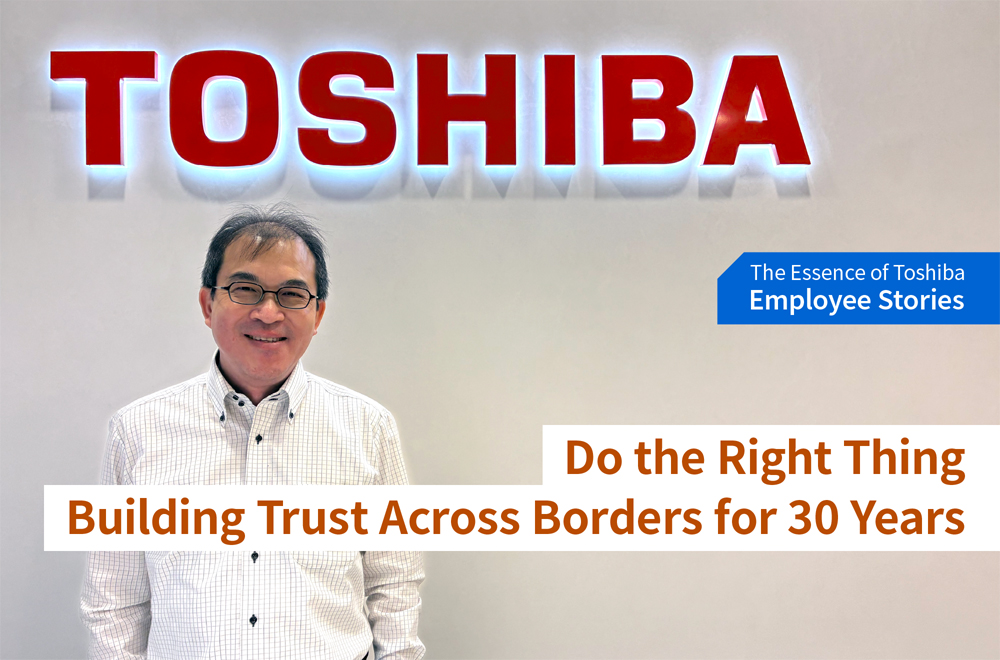
Mr. Chok Liongmeng leads the Energy Infrastructure Systems (EIS) Division at Toshiba Asia Pacific Pte. Ltd. (TAPL), the regional headquarters overseeing Southeast Asia, India, and Oceania. Born in Malaysia and now a Singapore citizen, he has built a career that spans continents and cultures. Since joining Toshiba in 1992 as part of its second global recruitment cohort, his journey has taken him across Japan, Germany, the Philippines, and Singapore.
Through each chapter, one principle has remained constant: a commitment to integrity.
Today, that principle continues to shape his leadership as he advances Toshiba’s infrastructure business across the region.
This article explores how that commitment has enabled him to build trust across borders and contribute to strengthening the foundations for future generations.
The bonds of “family” nurtured in Ome transcend language barriers
Chok’s career journey traces back to his university days in Taiwan, where he was studying IT. It was then that he developed a strong fascination with Toshiba’s Dynabook, a notebook PC that enjoyed global popularity at the time. Driven by a desire to learn from leading-edge technology and turn that experience into a lifelong asset, he set his sights on building his career in Japan.
When he joined Toshiba in 1992, his first assignment brought him to the Ome Operations in Tokyo, the very place where Dynabook was being manufactured. Stepping into the heart of Toshiba’s computer business, Chok found himself closer than ever to the technology that had first inspired him.
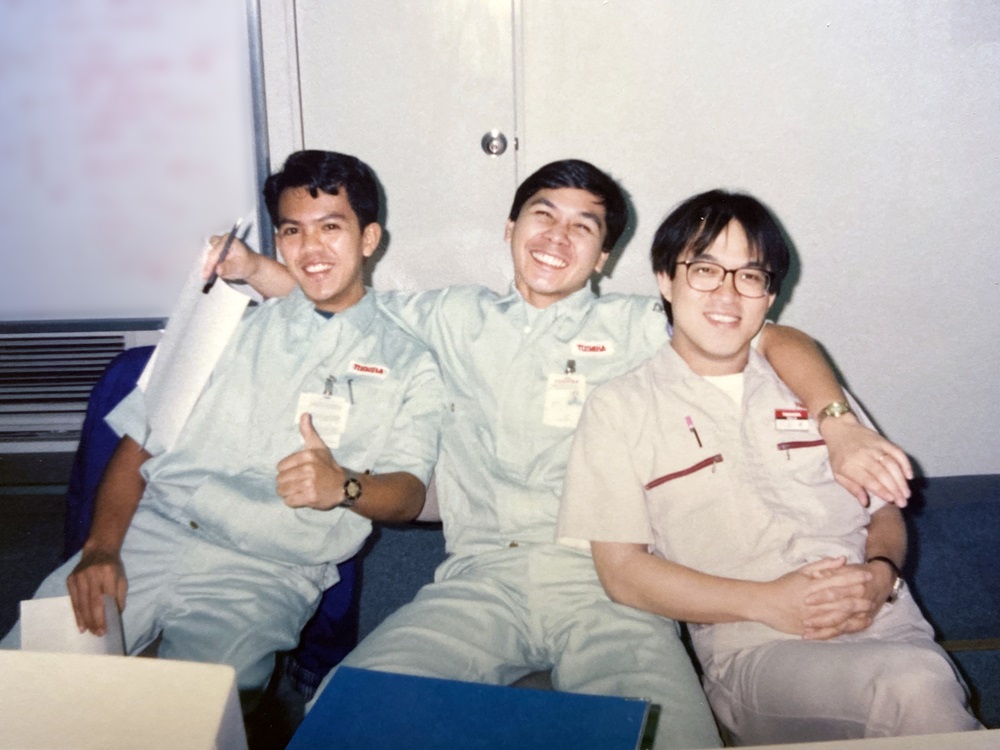
When Chok first arrived in Japan, he spoke no Japanese. Embracing the spirit of “When in Rome, do as the Romans do,” he committed himself fully to learning the language. After intensive training at Toshiba’s training center in Kawasaki, he spent six months commuting from Ome to Fuchu to attend Japanese language classes. There, he studied alongside colleagues from around the world, including the United States, the United Kingdom, South Korea, Canada, and Taiwan, supporting and motivating one another as they adapted to their new environment. Looking back, Chok recalls those days, remembering lively Saturdays spent gathering in each other’s dormitories, sharing pizza, and building friendships that went beyond language and nationality.
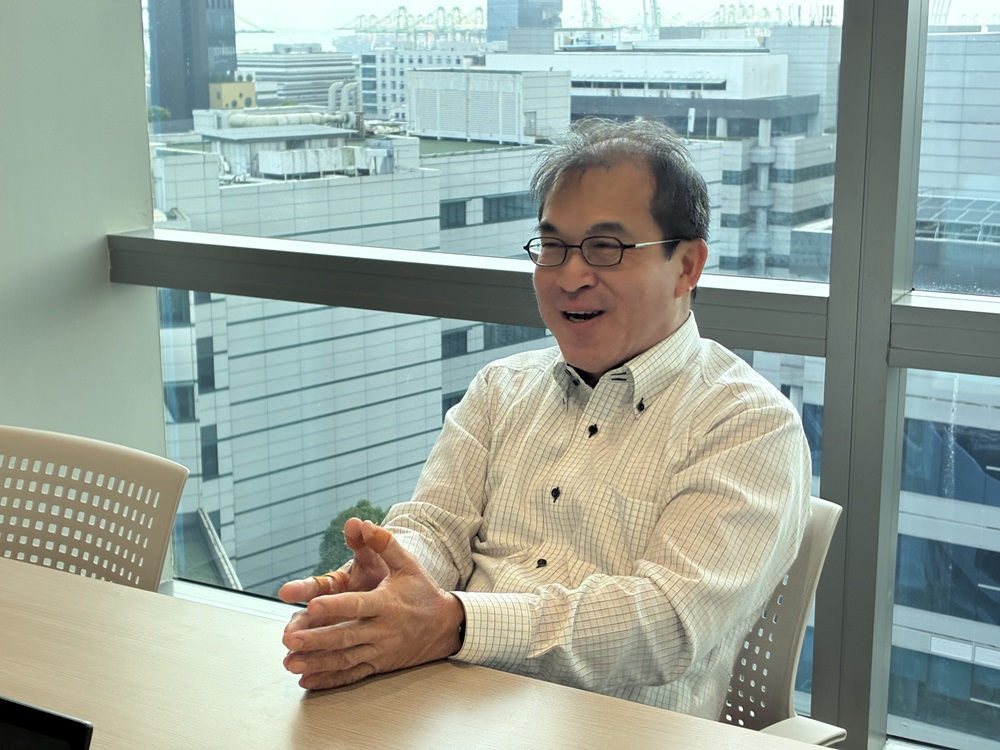
During his seven years at the Ome Operations, Chok was engaged in developing production management systems and control software for assembly lines. While navigating the challenges of the language barrier, he was deeply moved by the sincerity with which frontline workers and engineers approached their work, as well as by the warm, family-like atmosphere of the workplace. These experiences gradually fostered a strong sense of attachment to Toshiba.
“Everyone called me ‘Taku-san’ and accepted me as one of their own,” Chok recalls. “We spent time together beyond work, visiting each other’s homes and sharing meals, and I would sometimes cook Malaysian curry for them. That sense of closeness and support helped me grow, even across the language barrier.”
Chok left Toshiba in 2000 and went on to gain further experience as a consultant at a foreign-owned IT company. In 2003, he left Japan for family reasons and joined TAPL in Singapore, marking the start of a new chapter in his career.
Looking back, he recalls how the opportunity came his way. “A former supervisor reached out and told me, ‘You understand Toshiba well, and we need your expertise.’ I also felt strongly that I wanted to bring what I had learned in the consulting field back to Toshiba, so there was no hesitation in my decision.”
Tackling Tropical Challenges: An Energy-Saving Verification Project with Nanyang Technological University
After joining TAPL, Chok began his journey in the business planning division, supporting management across the region before moving to the sales front line in 2010. There, he played a key role in establishing the Smart Community team and, through close collaboration with government agencies and universities, helped drive projects linked to Singapore’s core infrastructure.
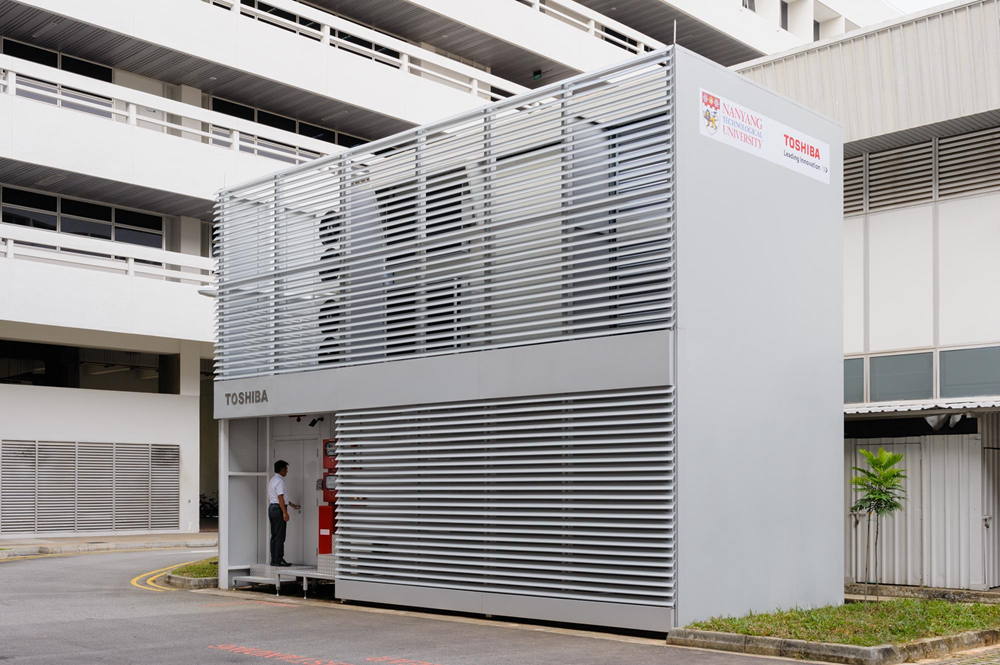
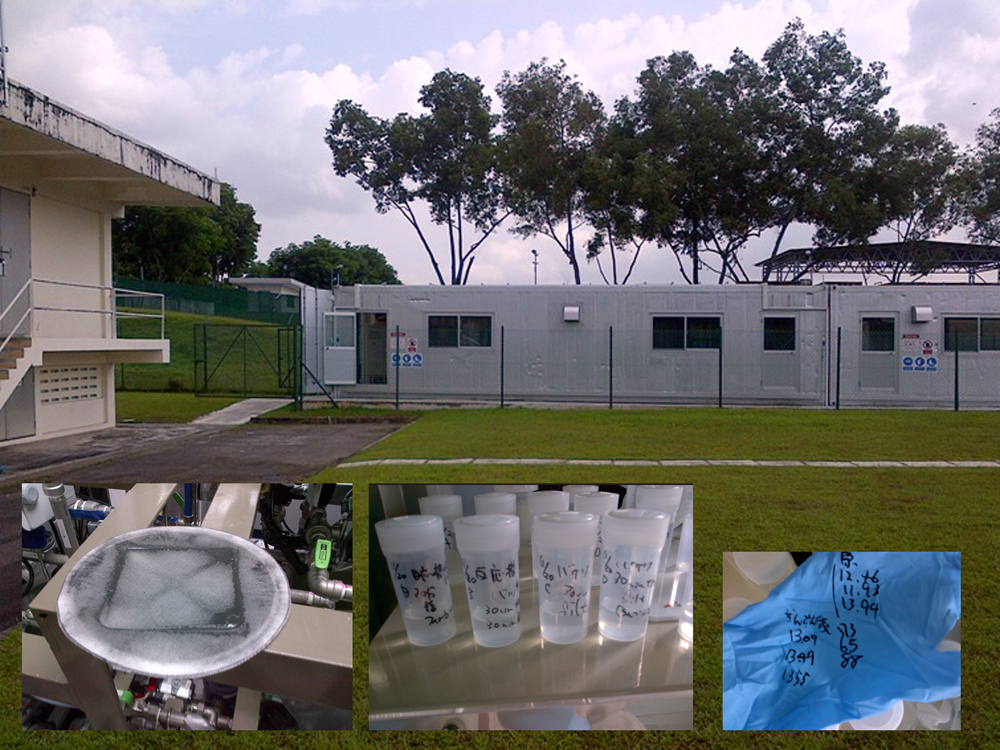
One notable example was a joint project with Nanyang Technological University (NTU) to validate modular data center solutions. In Singapore’s tropical climate, the energy required for data center cooling presents a significant national challenge. Leveraging a government grant, Chok led the development of a modular data center incorporating Toshiba’s advanced air conditioning control system, contributing to efforts to improve energy efficiency in this critical area.
Chok reflects on how the Smart Community team approached these initiatives:
“We invited researchers from Japan and worked closely with local universities to demonstrate how energy consumption could be minimized, even under extreme heat. Beyond that, we devoted ourselves to connecting Toshiba’s technologies with infrastructure challenges that directly impact people’s daily lives, including collaboration with Singapore’s Public Utilities Board (PUB) on water treatment solutions. These experiences have since become the foundation for how we develop proposals within the EIS Division.”
The Singapore Post project: Overcoming challenges as one team
Looking back, Chok regards the Singapore Post project secured in 2014 as the defining turning point in his career. It was a large-scale project to replace long-standing competitor systems at a major facility with Toshiba’s automated mail processing solution.
The most critical challenge was the transition. While keeping 24 existing machines fully operational, the team had to carry out a phased replacement with 14 new Toshiba systems. In Singapore’s postal operations, where items collected during the day must be processed overnight for delivery the next day, there was no margin for disruption. Any system failure would have had a nationwide impact. Under these conditions, Chok’s team worked tirelessly, often late into the night, maintaining rigorous control over resources and schedules to ensure a seamless transition.
Just as critical was the close coordination with Toshiba’s headquarters and factories in Japan, driven by a shared commitment to “Zero Gap” execution.
“We invited our customers to Japan for pre-shipment inspections, where we worked side by side with factory engineers to carry out repeated testing,” Chok recalls. “What made the difference was that we moved beyond the traditional roles of manufacturer and customer and worked together as one team, sharing the same goals and values. Even when challenges arose, there was no finger-pointing. Instead, we tackled them together. Building that level of trust is something I remain especially proud of.”
In the end, the transition was completed without a single incident. The customer credited Toshiba’s project management, and more than a decade on, the relationship continues to grow from strength to strength.
“Do the right thing”: The Value of Integrity
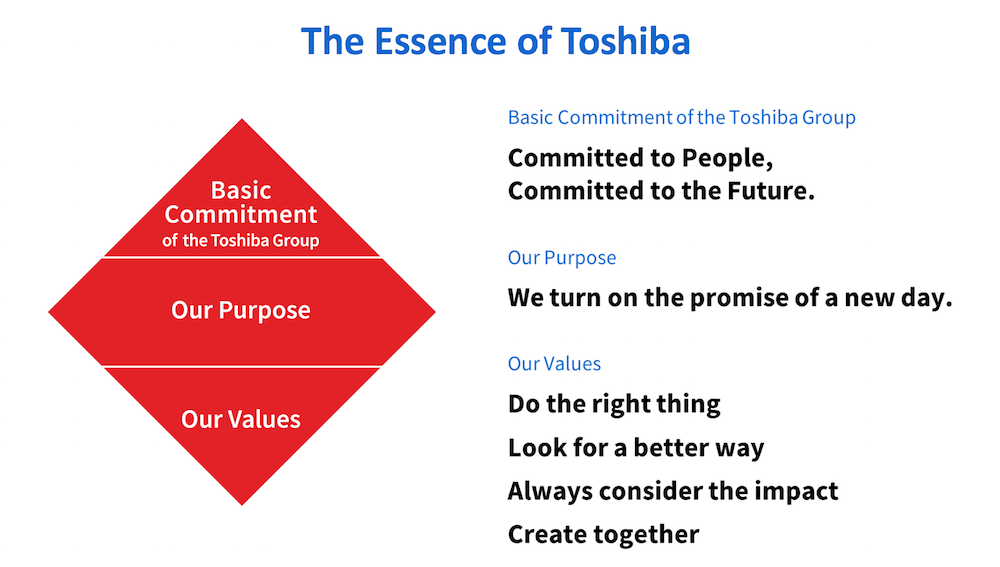
What Chok values most in his work is the trust he builds with his customers. Among the Toshiba Group’s values, the one he holds closest is “Do the right thing.”
“Tell a lie once, and you will need an even bigger one to cover it up,” Chok says. “Sooner or later, it will come to light, bringing with it risks and costs you cannot undo. If something cannot be done, it is better to be honest about it from the start and work together to find an alternative solution. That is what underpins long-term partnerships.”
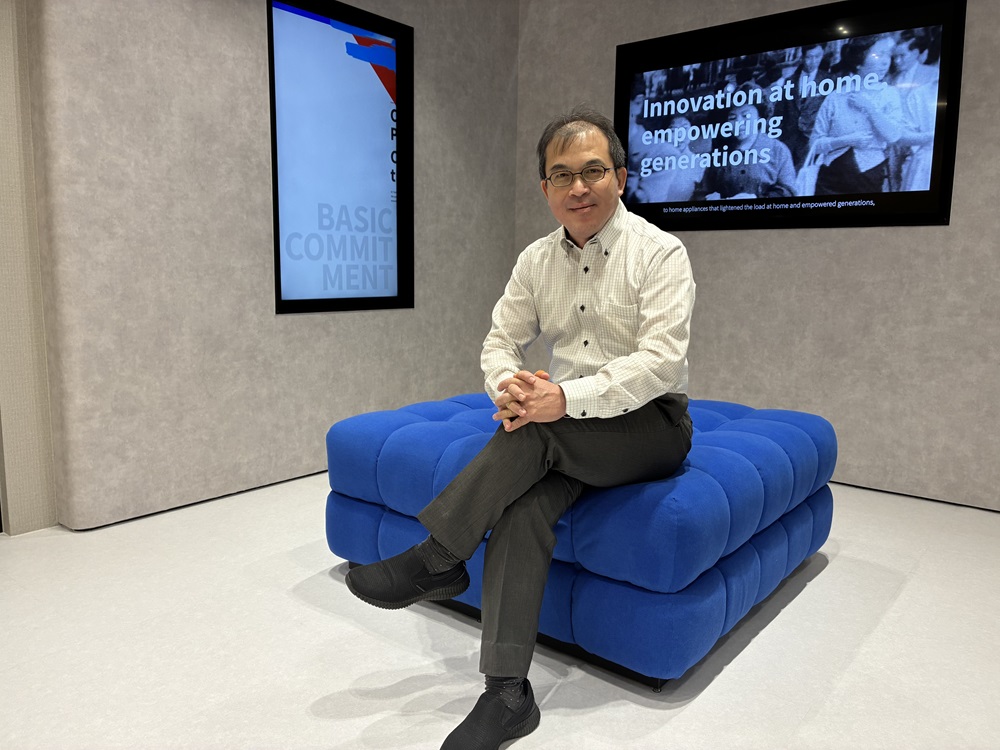
The philosophy of integrity is deeply rooted not only in Chok’s work, but in the way he lives his life. Even today, he wakes early every Saturday to travel from Singapore across the border to Malaysia, where he visits and cares for his father at a nursing home.
“I’m deeply grateful to my parents for everything they have done for me, and I want to support them in any way I can to enhance their quality of life,” Chok says. “Since my student days in Taiwan, I have lived independently overseas and learned to take ownership of my own path. Those experiences continue to shape my sense of responsibility and conviction. For me, caring for my family and supporting social infrastructure are both expressions of the same commitment to ‘Integrity’.”
Today, the EIS Division under Chok’s leadership operates at the heart of essential social infrastructure, spanning power, rail, and postal systems. Working as one with his team and colleagues across Toshiba’s headquarters in Japan, he speaks with a strong sense of mission: “What we provide is essential to people’s daily lives, which is why we must continue delivering sustainable value into the future. To me, that is what it means to be ‘Committed to People, Committed to the Future.’”
As the conversation comes to an end, Chok mentions with a quiet smile, “It’s my daughter’s birthday today, so we are going out for dinner to celebrate.” In that moment, it becomes clear that what he values most are the connections he shares with others, including family, customers, and colleagues.
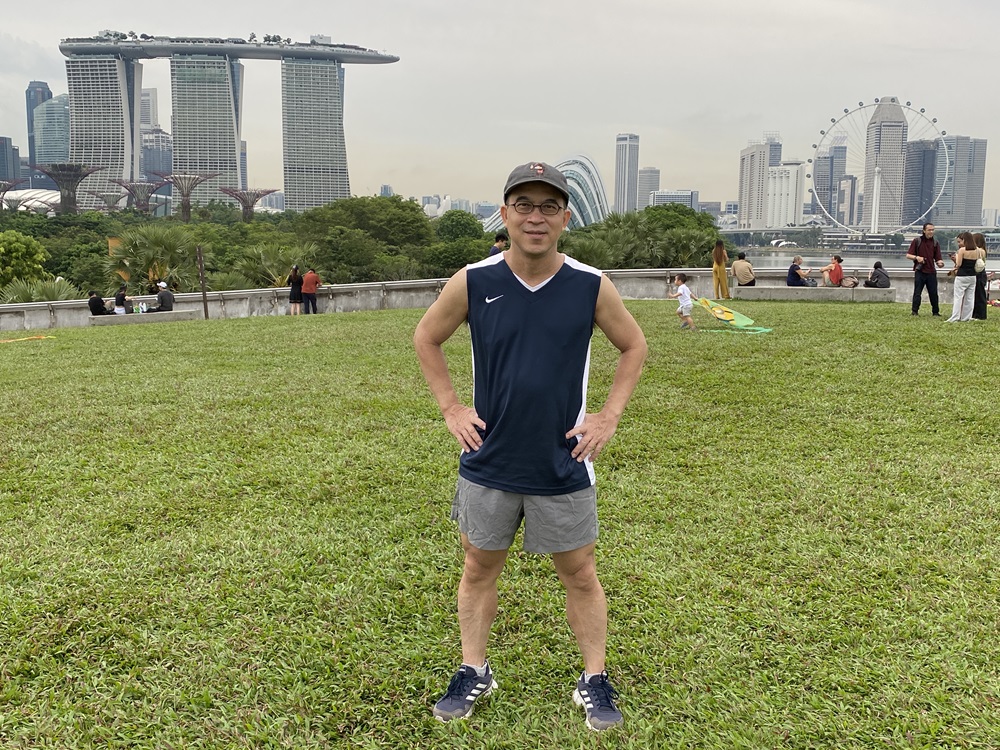
Outside of work, he keeps active with regular runs to maintain his health and shares a personal goal of one day taking part in the Mt. Fuji Marathon. This reflects the way he approaches life, engaging fully without drawing boundaries between work, people, and personal commitments. For Chok, integrity is not something applied selectively. It is a way of life that connects every relationship and responsibility. Through the bonds he continues to build and uphold, his journey continues to help shape a new future for Southeast Asia.
Share this article