





Possibilities with Real-Time Data: New Ideas Emerging in India with Toshiba’s Data Platform “GridDB™”
Possibilities with Real-Time Data: New Ideas Emerging in India with Toshiba’s Data Platform “GridDB™”
2026/08/21 Toshiba Clip Team
- Real-time data becomes valuable only when it can be processed accurately, continuously, and at speed—without disrupting operations.
- GridDB, Toshiba’s distributed time‑series database, is designed as operational data infrastructure for systems that must run reliably in real time.
- In India, Toshiba conducted a hackathon where developers and startups could validate new use cases, showing where GridDB can deliver immediate value.
Today, the Internet of Things (IoT) connects billions of connected devices that constantly generate data from machines, systems, and services. Transforming this continual flow of data into business value requires more than analytics alone—it depends on whether the underlying data infrastructure can process it accurately, reliably, and in real time while systems remain in operation. When processing is delayed or unreliable, decisions are made on outdated information, increasing business risk.
At the center of this challenge is the role of the database. In real‑time IoT environments, databases must do more than store information. They must support uninterrupted operations, continuous data ingestion, and real‑time access without data loss or downtime. Toshiba’s GridDB database solutions address these requirements as a distributed time‑series database designed specifically for operational systems where reliability and real‑time performance are critical.
To better understand how these needs are emerging in fast‑growing digital markets, Toshiba engages with startup and developer communities. One example is the GridDB Cloud IoT Hackathon in India, which attracted more than 250 applications from teams exploring practical use cases across areas such as healthcare, finance, IoT, and knowledge management.
Together with broader ecosystem engagement, these activities provide early signals of what businesses increasingly expect from their data infrastructure—setting the stage for how GridDB can provide tangible business value.
Why operational data demands a different approach
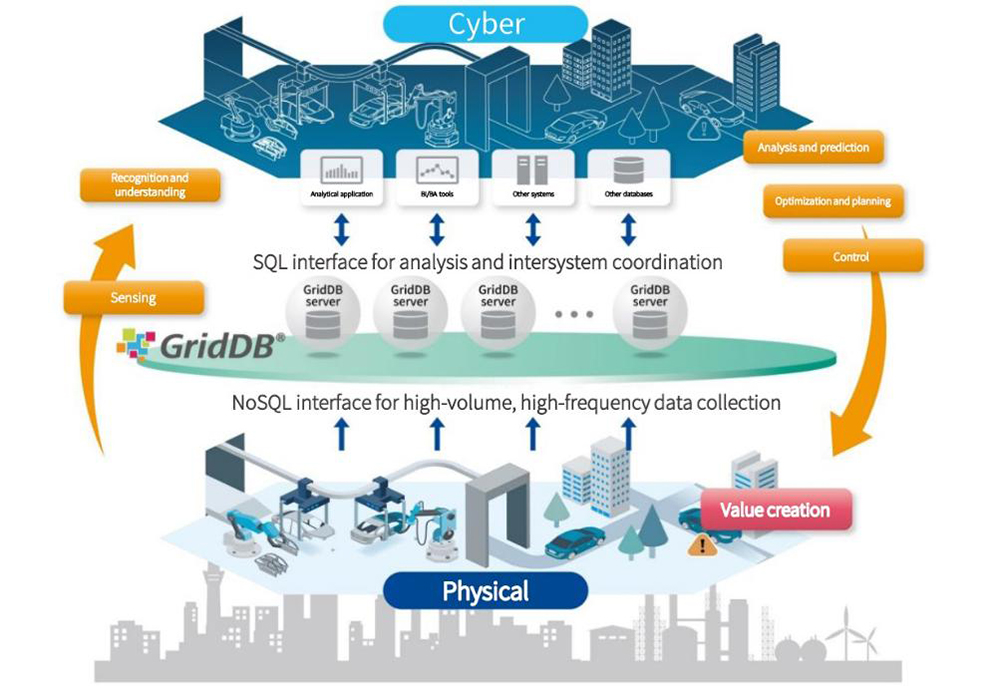
As digital transformation progresses, organizations are increasingly connecting physical equipment and devices with digital systems that monitor and analyze their operation. In industrial IoT and cyber‑physical system (CPS) architectures, this results in a continuous flow of time‑series data generated during live operations.
In these environments, data is not collected solely for later analysis. It must be processed while systems are running, often at high frequency, large scale, and over long periods. Conventional relational databases, originally designed for transactional or batch workloads, are not always suited to these conditions. As data volumes grow, issues such as latency, scalability constraints, or maintenance‑related downtime can directly affect operational stability.
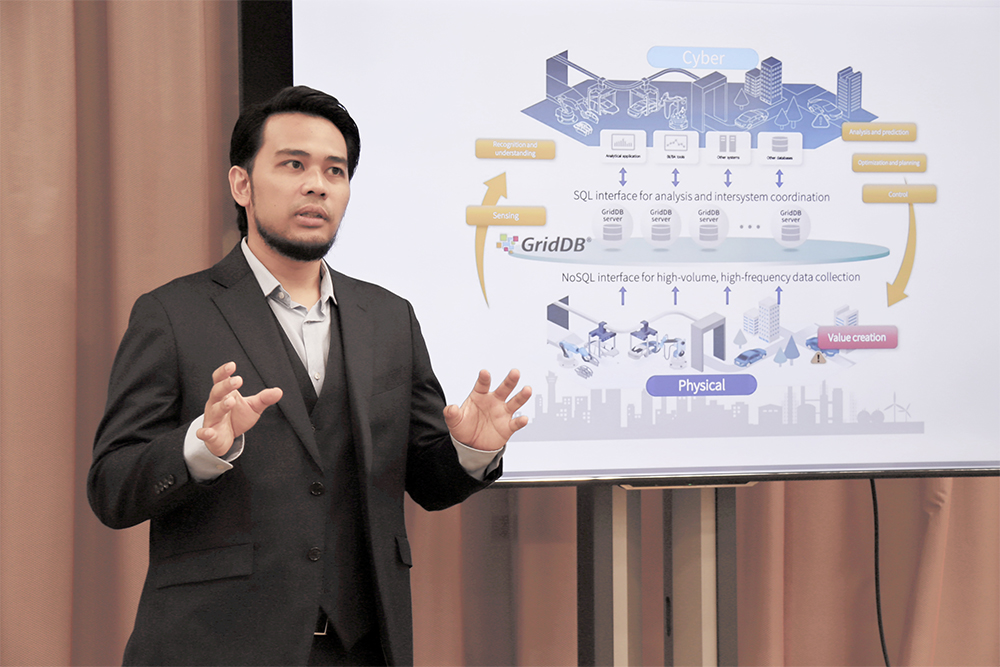
“In cyber‑physical systems, the true advantage lies in deriving insights the moment data is generated—and acting on them immediately,” says Angga Suherman from Toshiba’s Data Business Promotion Department. “Real-time systems make this possible, but they depend on a data platform that can process information instantly, reliably, and without interrupting operations. As a result, the role of the data platform is changing: it is no longer just a place to store data, but an active layer within the operational loop. GridDB was designed to support this shift, enabling immediate insight and uninterrupted processing at scale.”
From global adoption to market signals in India
This design philosophy is reflected in GridDB’s growing global presence. GridDB Cloud is available in 26 countries and regions around the world, while GridDB Community Edition is offered worldwide as a free download via GitHub—allowing developers and businesses to test the technology under real operating conditions. The response has been telling: global downloads for the GridDB Community Edition via GitHub now exceed 200,000, with India accounting for a significant share of community adoption.
That interest isn’t surprising when you look at the bigger picture. India’s digital story is unfolding at an incredible pace. Today, the country generates nearly 20% of the world’s data, steadily positioning itself as a global digital powerhouse. AI is beginning to reshape industries across the economy, supported by strong policy momentum through initiatives like Digital India and the rapid expansion of IoT and Industrial IoT. At the same time, programs like Startup India are nurturing one of the world’s largest innovation ecosystems, with over 463,000 ventures listed on the government portal at the start of August 2026.
“Through our engagement in India, we see one of the world’s fastest-growing digital economies, where massive volumes of data are continuously generated and put to use across sectors,” Angga notes. “For GridDB, India represents not just a growth market, but a strategic environment where the ability to handle scale, cost efficiency, and reliability is rigorously tested. Strong adoption in this context demonstrates that the platform is built for real-world demands and ready to support the next wave of data-driven innovation globally.”

Use cases emerging from India’s builder ecosystem
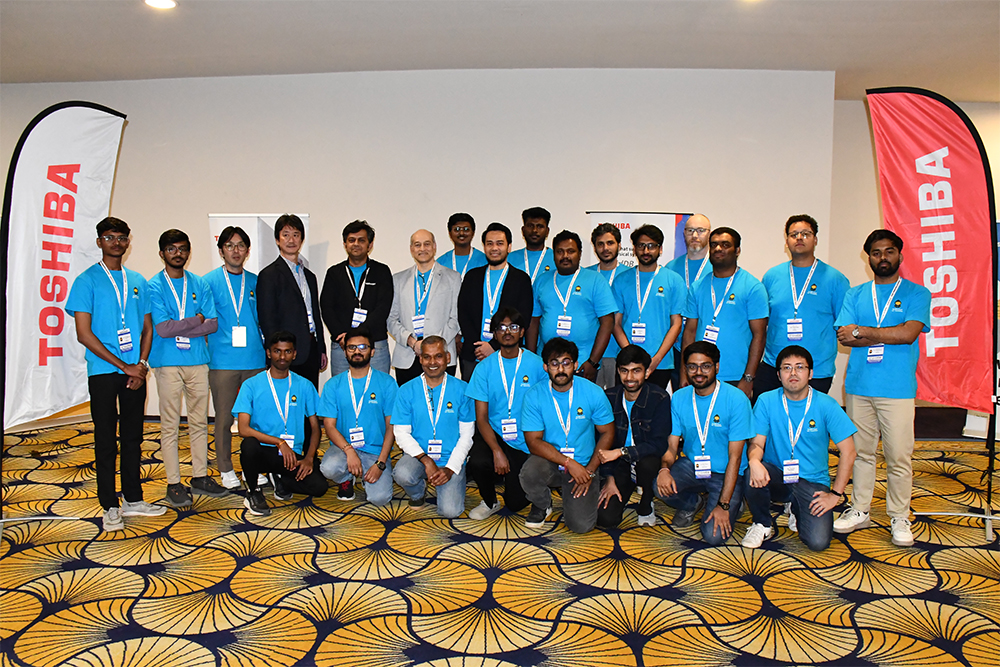
Toshiba engages with India’s startup and developer ecosystem through direct customer interactions as well as broader initiatives. The 2025 GridDB Cloud IoT Hackathon is one successful example.
The event attracted more than 250 applications from across the country, and offered a snapshot of how real-time data platforms are being tested in practice. Projects submitted spanned domains such as healthcare, finance, industrial IoT, and enterprise systems. After initial evaluation, five winning teams were selected to go on to develop industry‑ready proof‑of‑concept solutions with direct support from the GridDB technical team.
Two representative examples illustrate the range of operational use cases.
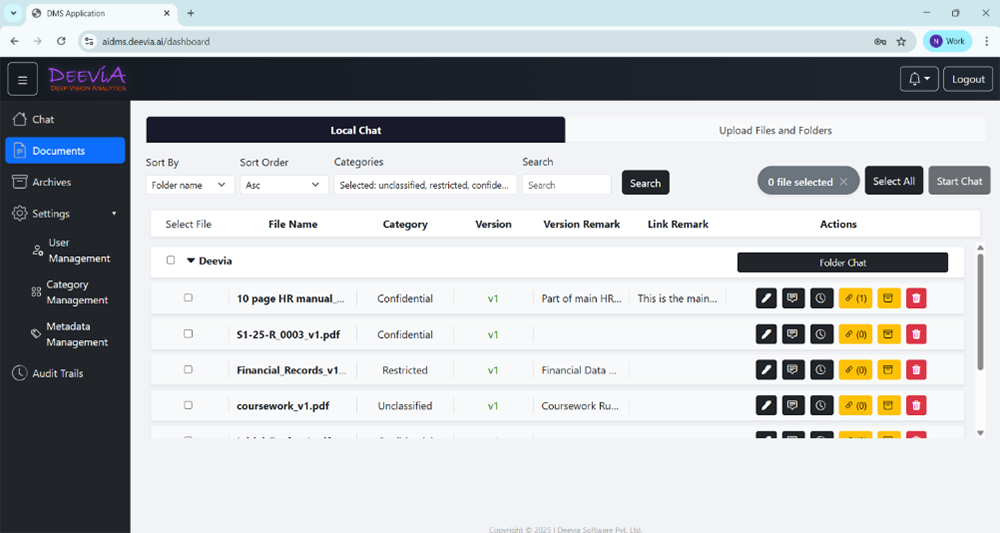
Use case 1: AI-DMS — Re‑thinking document management as an operational system
Developed around a challenge familiar to many organizations, the solution focuses on managing large volumes of documents that are constantly accessed, updated, and audited during daily operations. Rather than treating documents as static files, the system models documents, versions, user interactions, and audit logs as time‑ordered data.
This approach enables real‑time search, role‑based access control, and traceability while the system remains in active use. The project demonstrates how even non‑IoT workloads can impose operational demands on data infrastructure when reliability and continuity over time are essential.
Use case 2: Smart Factory IoT Pulse — Making shop‑floor operations visible in real time
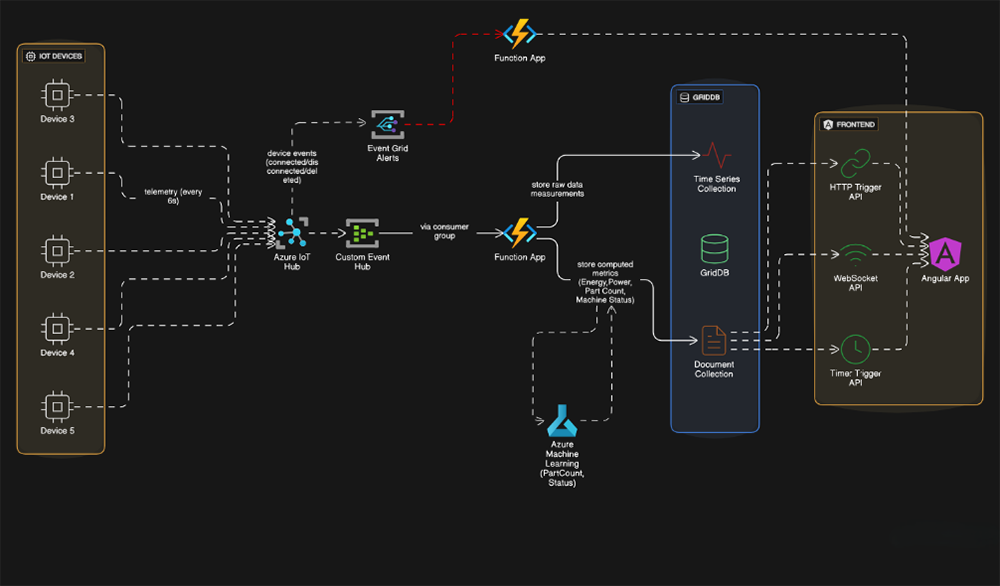
Designed for manufacturing environments, the solution connects machines that continually generate high‑frequency data—such as status updates, production counts, and energy consumption—and makes that information visible as operations unfold.
By ingesting telemetry data in real time and presenting live dashboards and operational KPIs, the system enables factories to monitor conditions, detect anomalies, and respond to issues without relying on delayed reports. The project highlights how GridDB can support day‑to‑day operational awareness in industrial settings.
“The hackathon showcased a diverse range of real-world use cases, highlighting the growing demand for real-time systems,” says Angga. “The way teams designed solutions for continuous operation, along with reliability and scalability, demonstrates how well GridDB supports these requirements—enabling a seamless transition from prototype development to real-world deployment.”
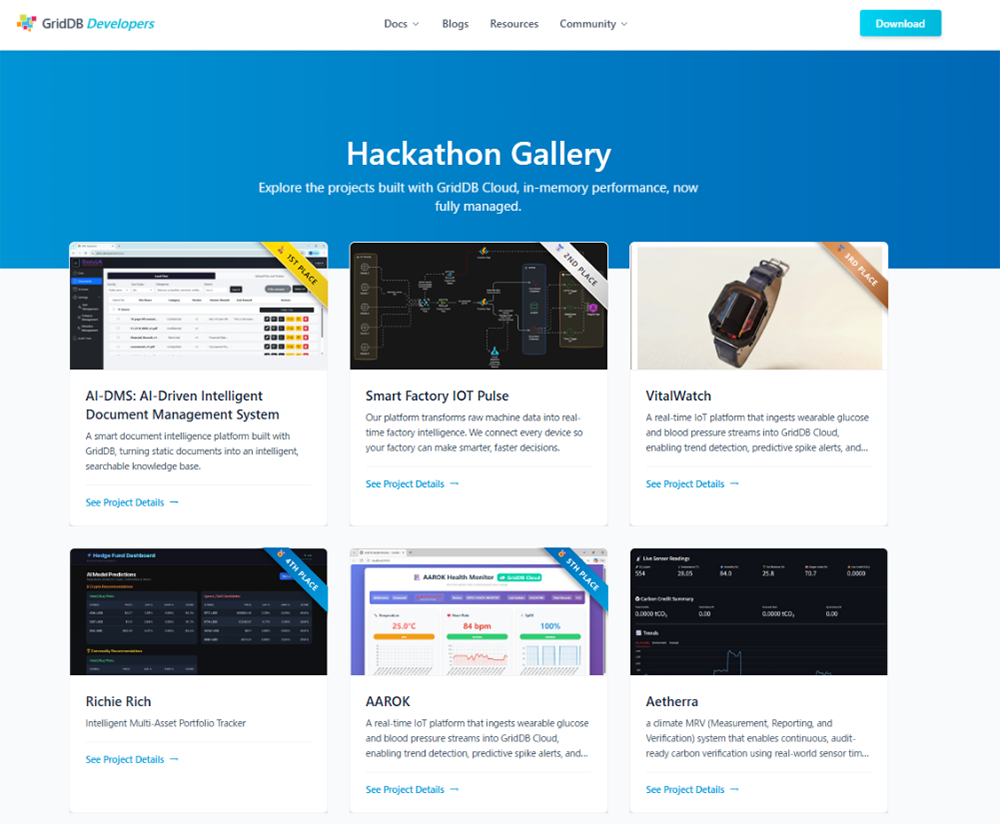
Building on these outcomes, Toshiba has curated more than 20 project ideas from the hackathon and made them publicly accessible through the GridDB Hackathon Gallery, allowing a broader audience to see how GridDB Cloud is being applied in practical scenarios.
Outlook: from early signals to long-term collaboration
India’s digital momentum continues to accelerate, supported by policy initiatives, widespread IoT adoption, and one of the world’s largest startup ecosystems. The use cases seen through the India hackathon are one example of a broader global trend: startups and developers are looking for ways to turn real-time data into practical services and solutions.
Against this backdrop, Toshiba is expanding its engagement with innovators worldwide through the GridDB Startup Program, a global initiative that fosters long-term partnerships with startups. Through the program, Toshiba aims to co-develop real-time data applications on GridDB Cloud and help promising ideas move closer to real-world deployment.
“Our goal is to give startup teams more room to experiment, so they can prototype, validate, and scale their ideas without being held back by infrastructure management,” Angga says of the program. “By offering access to GridDB Cloud, hands-on technical support, and opportunities for joint promotion, we support them in moving from proof-of-concept toward market deployment and broader growth.”
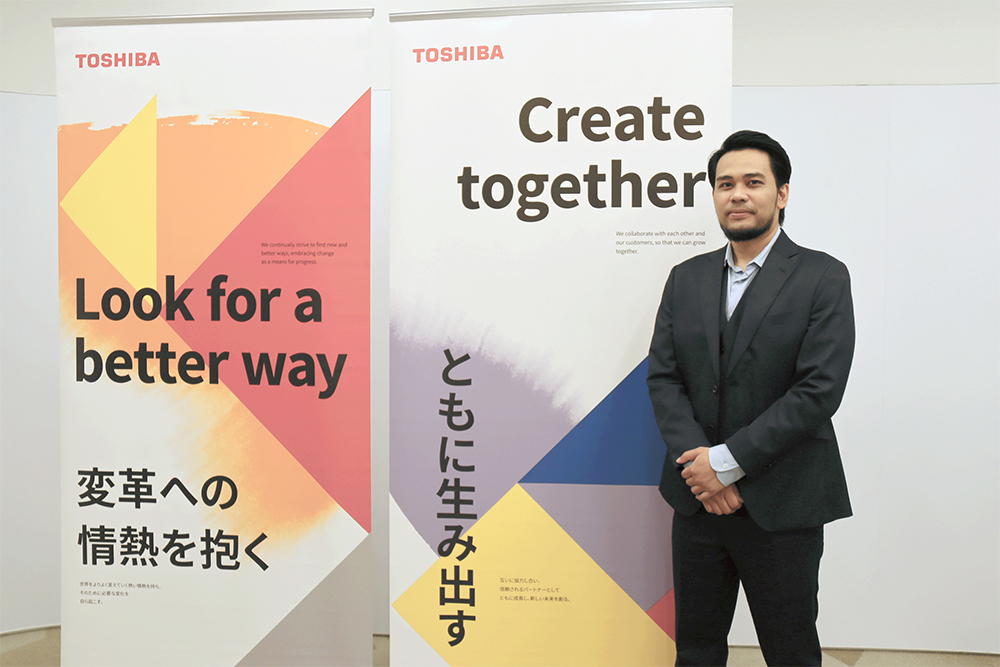
In this context, GridDB reflects Toshiba’s philosophy of “Look for a better way” and “Create together”—not as abstract ideas, but as a constant effort to work with developers, partners, and customers to build reliable, real‑time systems that businesses can depend on over the long term.
Related Links
*This section contains links to websites operated by companies and organizations other than Toshiba Corporation.
Toshiba Launches GridDBTM Startup Program to Collaborate with Innovators and Co-Create Future Technologies - Driving business creation through real-time processing of large-scale time-series data - | Toshiba
GridDB | Toshiba




Share this article